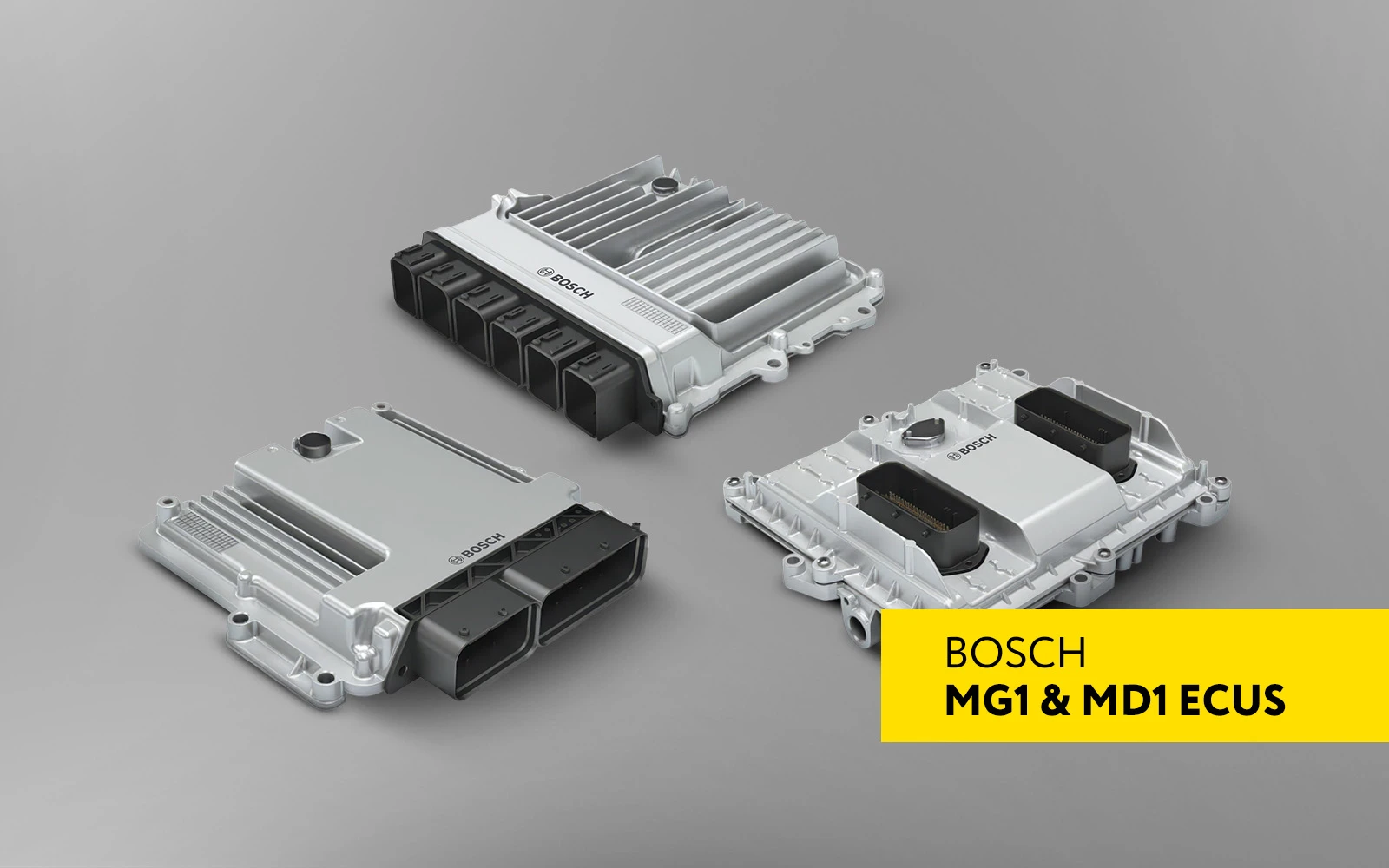
Bosch MG1 & MD1 ECUs: Mysteries, Myths, and Legends
2019. The world was a simpler place—there was no global health scare, no looming economic crisis, and we certainly weren't holding our breath over global conflicts every day. It was during this relatively peaceful era that diagnosticians and tuners around the globe first started encountering the next generation of Bosch Engine Controllers. We were all in awe of the great new features and the massive evolution over the outgoing MED17 and EDC17 controllers.
I. History vs. Myth: How are the two generations different?
To truly understand the MD and MG engine controllers, we must first look at why the change was needed. The MD/MG is a direct descendant of the MED/EDC 17 family. We can start by defining exactly what they are:
The Predecessor: MED17 / EDC17
Introduced around 2006 to replace the ME9/EDC16 units, this generation laid the groundwork for modern direct injection and diesel control.
- Naming Convention: MED (Motronic Einspritzung Direkt - Gasoline Direct Injection) and EDC (Electronic Diesel Control).
- Processing Power: Built around the Infineon TriCore TC17xx family of microcontrollers (e.g., TC1766, TC1793, TC1797). These are generally older, single-core processors.
- Memory: Flash memory sizes are relatively small, typically ranging from 2MB to 4MB. Internal EEPROM is used for immobilizer data, coding, and adaptations.
- Networking: They rely heavily on standard CAN-BUS protocols (typically 500 kbps) and early FlexRay integration.
The Successor: MG1 / MD1
Introduced around 2015/2016 to meet stricter Euro 6d emission standards, support advanced ADAS integration, and manage complex hybrid powertrains.
- Naming Convention: Simplified to MG (Motor Gasoline) and MD (Motor Diesel).
- Processing Power: They represent a massive leap in processing power, utilizing multi-core architectures. Predominantly built on the Infineon AURIX TC2xx / TC3xx multi-core processors, though some specific vehicle manufacturers utilize NXP or SPC (STMicroelectronics) microcontrollers. This multi-core setup allows for significantly faster calculations of complex fuel maps and hybrid system coordination.
- Memory: Because the operating software is vastly more complex, flash memory sizes are heavily expanded, typically ranging from 4MB up to 8MB.
- Networking: Designed to act as "Superbrains" within modern centralized vehicle architectures (like BMW's BDC/Heart of Joy or Mercedes' latest FBS4 platforms). They support CAN FD (Flexible Data-rate), advanced FlexRay, and Gigabit Automotive Ethernet. This allows them to transmit and receive diagnostic data, torque requests, and sensor telemetry in milliseconds, drastically reducing latency compared to older CAN systems.
II. Security, Tuning, and Diagnostic Access
This is where the most drastic differences lie for technicians, tuners, and diagnosticians who want to perform module replacements.
The MED17 / EDC17 Approach
These units feature TPROT (Tuning Protection). Initially, they could be flashed via OBD. When manufacturers locked OBD access, tuners had to physically open the ECUs to access the motherboard for "Boot Mode" reading. Eventually, tool developers created "Bench Mode," allowing technicians to read the internal password and clone/flash the ECU directly through the external connector pins without breaking the seal.
The MG1 / MD1 Approach
These newer units employ an advanced CSM (Cyber Security Module) and Secure Boot architecture. They do not have a traditional, accessible motherboard Boot Mode like the EDC17. Instead, they are designed to be read exclusively via "Bench Mode" (factory service mode) or specialized OBD protocols.
Two Generations Under the Same Name
A crucial distinction with MD1/MG1 units is their production date. Units produced PRE-2020 can generally be read and written on the bench or even OBD. However, in mid-2020, Bosch implemented a severe security update. POST-2020 MD1/MG1 units feature a heavily locked bootloader that closes the traditional Bench Mode exploit. Working with post-2020 units often requires specialized unlock procedures, manufacturer-specific workarounds, or limits interventions entirely to official online diagnostic platforms.
For the moment, we at Abrites fully support the unlocked versions, and we can replace those ECUs. Even in cases where the car has a locked version of the MD1/MG1, we can take a used ECU which was produced prior to 2020 and adapt it to the vehicle. This is particularly true and highly effective when working with Mercedes-Benz vehicles.
III. The Mythical Unlock
Companies such as FEMTO and Autotuner, whom we deeply respect, provide their own solutions for unlocking the locked MD1/MG1 ECUs. They have different approaches—you can send the ECU to them to have it unlocked, or they could mail you an unlock you can program yourself. That is a step in the right direction, for sure.
Please note, however, that this is a solution dedicated primarily to tuning and not adaptation.
When adapting these ECUs, we need a permanent solution, and I believe we will have one in 2026. This breakthrough should allow us to perform full adaptation of ECUs and continue pushing the boundaries—not only through tuning but also through complete module replacement, as we have always intended.
It was important to me to talk a bit about the whole situation with MD1/MG1 because I believe there are a lot of misconceptions going around. We need to know exactly what we are up against so that all of us—all companies dedicated to automotive professionals—can work together to resolve the issues placed before us by the manufacturers.
Until next week! Try to have fun at work,
Alek
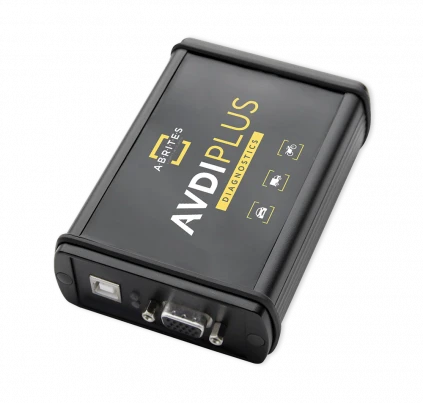 AVDI
AVDI
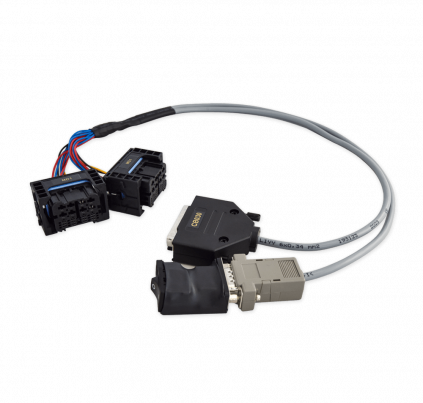 Mercedes-Benz MD1/MG1 ECU connection cable
 DAS4/FBS4 Personalization Expert